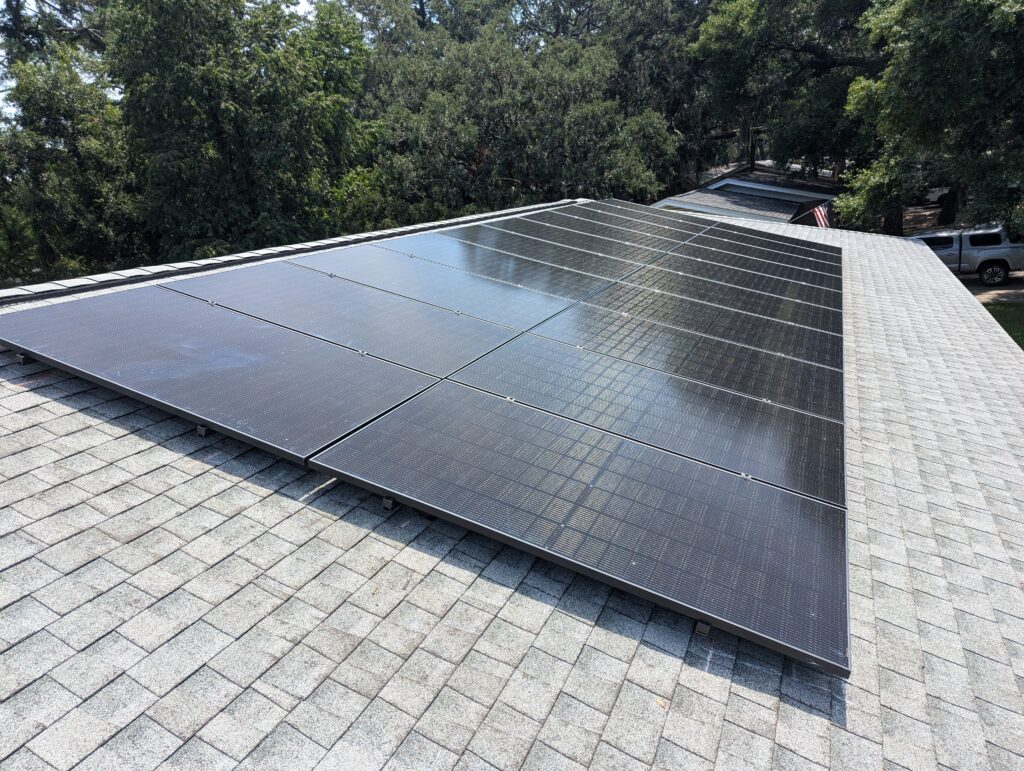
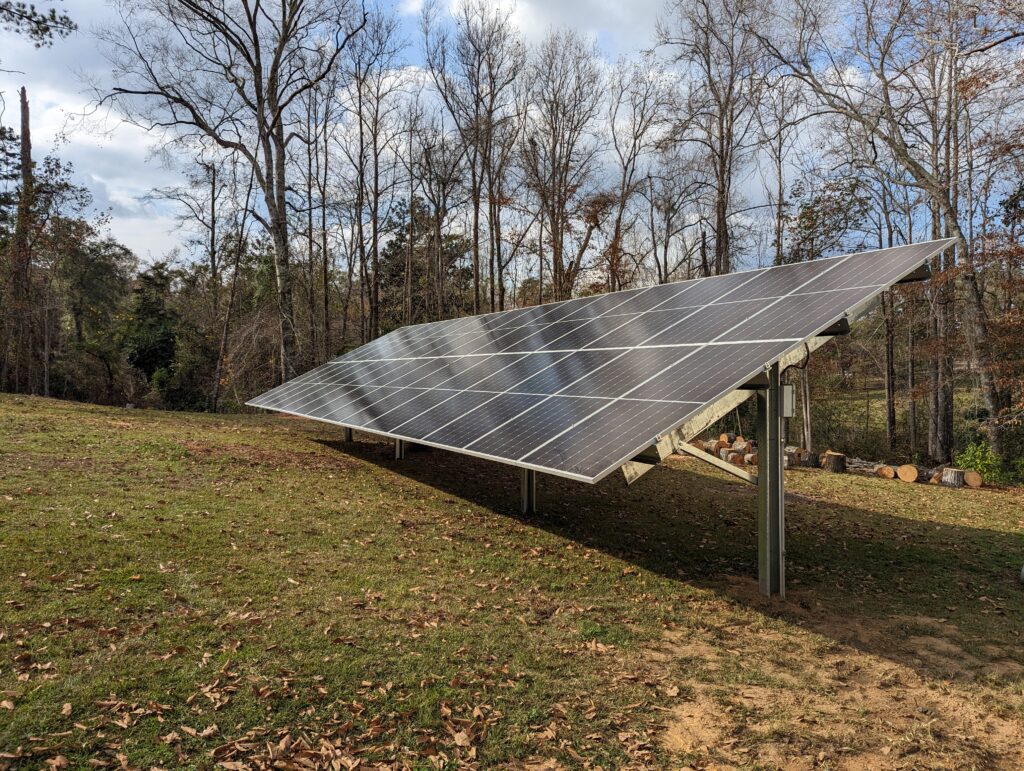
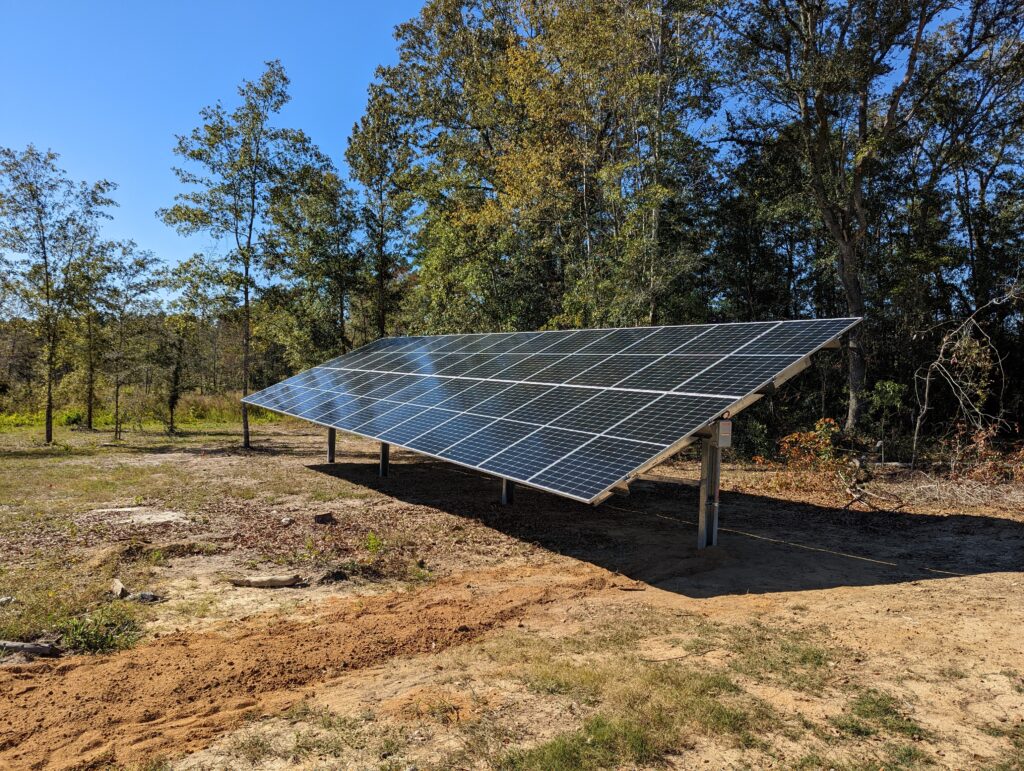
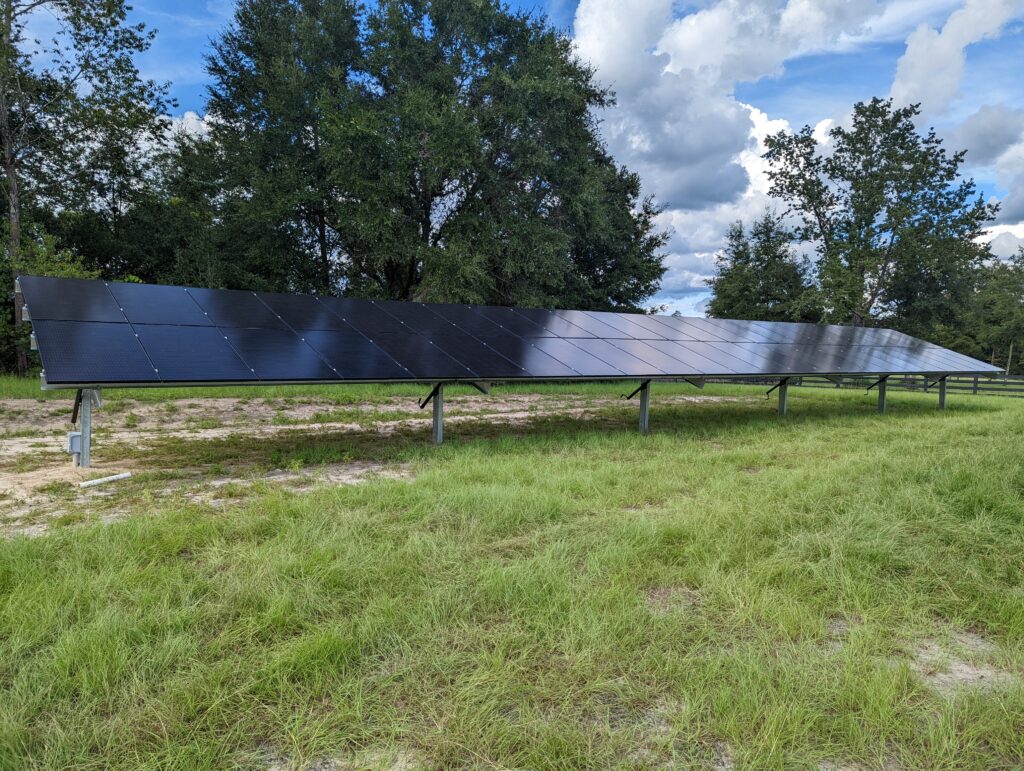
ground-mount solar array for off-grid system

Going Off the Grid: Navigating the Realities, Costs, and Strategies for Energy Independence

The allure of off-grid living has never been stronger, especially with the latest advancements in solar technology and the decreasing costs of batteries. At Georgia Solar Pros, we’ve noticed an increased interest in this approach and have helped several customers achieve these aspirations of becoming fully energy independent. However it should be noted that transitioning your home to complete off-grid living is a considerable undertaking. It involves not just a financial investment but also a deliberate adjustment in lifestyle to ensure its effectiveness. The Financial and Lifestyle Implications of Off-Grid Living Opting for an off-grid lifestyle usually means prioritizing self-reliance and energy independence over immediate cost savings. For most homeowners with access to the grid, fully transitioning to off-grid living is not a path to financial savings, particularly when compared to standard grid power or even grid-tied and hybrid solar systems. Off-grid solutions are more cost-effective for smaller or remote setups where connecting to the grid is not viable. However, for the average residential home, shifting to a completely off-grid system involves a considerable initial investment, driven more by the desire for autonomy and a reliable power source than by financial incentives. Understanding the Sizing and Complexity of Off-Grid Systems Off-grid systems require careful sizing to ensure uninterrupted power, as they must operate 24/7/365.  Off grid designs must include:: Larger Solar Arrays: These are necessary to account for reduced production on cloudy days. Expanded Battery Storage: Essential for powering your home through the night and during periods with less sunlight. Backup Power Solutions: A generator or an alternative backup source is crucial, especially during prolonged periods of poor weather. Even in off-grid setups, some form of grid connection can be a useful backup. Centralized Power Systems: For larger off-grid homes or those seeking complete self-sufficiency, centralized power systems are critical. Centralizing components like batteries, inverters, and generators in a dedicated space improves maintenance, safety, and scalability. Costs Involved in Going Off the Grid Transitioning to a fully off-grid system is a substantial investment. For an average-sized home with power bills averaging $150-$400/month, installed costs on a fully autonomous off grid power system can range from $90,000 to $175,000, depending on the home’s size and energy requirements. Larger energy needs result in higher costs due to the scale of solar arrays, battery storage, and backup systems needed. Practical Strategies for Achieving Off-Grid Living Living off-grid with a large system allows for a normal lifestyle, but there are strategies to make it more achievable and budget-friendly: Adjust Energy Usage: Adapt your consumption to match weather patterns, using more power during sunny periods and conserving when it’s cloudy. Invest in Home Efficiency: Enhancing your home’s energy efficiency through better insulation, energy-efficient appliances, and smart technologies can ease the transition. Utilize Backup Power: Depending on backup sources like generators or a partial grid connection can reduce the need for a large battery bank but may impact your level of independence. Thinking About Off-Grid Living? Embarking on the off-grid journey is empowering but requires a thorough understanding of the associated costs, logistical needs, and lifestyle changes. At Georgia Solar Pros, we’re dedicated to guiding you through this process, ensuring your move to off-grid living is well-informed, smooth, and customized to your specific requirements.  For an off-grid system that aligns with your lifestyle and energy objectives, reach out to Georgia Solar Pros here. About Us Georgia Solar Pros specializes in tailor-made solar solutions, ranging from standard grid-tied setups to intricate, large-scale off-grid systems. We focus on your need for independence, sustainability, and peace of mind. Discover your options with us, as we help you navigate the path to energy independence. 

Going Off the Grid: Navigating the Realities, Costs, and Strategies for Energy Independence Read More »

rooftop solar investment

Understanding the Longevity of Your Solar Investment: A Journey Beyond Installation

Embracing a Sustainable Future with Reliable Support The decision to go solar is a significant step towards a sustainable future. However, the journey doesn’t end with the solar panels gleaming on your roof. It’s the ongoing support after installation that truly determines the value of your solar investment. At Georgia Solar Pros, we’ve seen how a lack of reliable support can leave customers in a lurch. Through our experiences, we’ve come to understand the importance of dependable post-installation care, a service that unfortunately, many in the industry overlook. Navigating the Aftermath of Solar Installation The solar industry, booming with potential, unfortunately harbors a concerning trend. Homeowners often find themselves abandoned post-installation. We’ve seen companies closing down, solar installers who vanish after the initial setup, and those who outright refuse to provide aftercare. This negligence not only disrupts the functioning of solar systems but also shatters the trust customers place in the solar industry as a whole. Rescuing Abandoned Solar Systems Our commitment at Georgia Solar Pros is to bridge this gap. We’ve encountered numerous cases where homeowners were left stranded by their original installers. In Valdosta, a homeowner’s system lay dormant for months due to a failed inverter. The original installer was nowhere to be found. Stepping in, we not only replaced the inverter but also navigated the complexities of the warranty process on behalf of the homeowner. Similarly, a homeowner’s off-grid system in Bainbridge Georgia was crippled by dead batteries. Again, the original installer was absent in this hour of need. Our team responded promptly, upgrading the system with efficient lithium LFP batteries, revitalizing its performance. In Albany, we came across a situation where a roof leak caused due to faulty installation had caused significant water damage in a client’s home. The original solar installer’s poor workmanship and  lack of response compelled us to take action. We removed the system to facilitate roof repairs and then reinstalled it, ensuring the new solar penetrations longevity aligned with that of the new roof. The Essence of Post-Installation Support These stories highlight a critical aspect often overlooked in the solar industry – the essence of post-installation support. It’s not just about fixing problems; it’s about ensuring that your solar system, a significant investment, continues to deliver value for years. It’s about being there when unforeseen challenges arise and standing by our commitment to your sustainable journey. Choosing Your Solar Partner Wisely Selecting a solar installer is a decision that goes beyond pricing and initial promises. It’s about finding a partner who will stand by you throughout the lifecycle of your solar system. Look for a company that not only installs but also commits to the long-term performance and upkeep of your system. Prioritize transparency, communication, and a proven track record of responsive support. Conclusion At Georgia Solar Pros, we believe in the power of enduring relationships. We’re not just installing solar systems; we’re building partnerships based on trust, reliability, and mutual respect for the environment. Join us in embracing solar energy, not just as a product, but as a long-term commitment to a greener, more sustainable future. Connect with Georgia Solar Pros Embark on your solar journey with a team that’s committed to your satisfaction every step of the way. Reach out to Georgia Solar Pros for an experience that transcends the ordinary. About Us Georgia Solar Pros is more than a solar installation company. We are your partners in bringing sustainable energy solutions to life, with a commitment that extends far beyond installation day. Discover more about our approach.

Understanding the Longevity of Your Solar Investment: A Journey Beyond Installation Read More »

Ground Mount solar panels installed by Georgia Solar Pros

Roof Mount Solar vs. Ground Mount Solar: Pros & Cons

Both ground mount and roof mount solar systems have their own pros and cons. Homeowners should consider their specific needs and budget when deciding between the two. It’s always best to consult with a trusted solar installation company, such as Georgia Solar Pros, to get a custom quote and determine the best option for your home.  However, the following provides a general guide about the overall pros and cons of both ground and roof mount solar installations. Pros & Cons of Roof Mount Solar Panels Traditionally, roof mount solar installations have been the most popular choice for both home and business owners.  The reasoning behind the popularity is pretty simple.  Roof mounted solar generally offers: A Lower Cost of Installation: Roof mount solar systems are typically less expensive to install compared to ground mount systems. Space-Saving: Roof mount solar systems do not take up any additional outdoor space, making them an ideal option for homeowners with limited space. Easy Installation: Roof mount solar systems are typically easier to install and can be less intrusive, as they are installed on the roof and not on the ground. However, the rooftop isn’t ideal for placing solar panels in all situations.  Roofs vary greatly in terms of pitch, material, and sun coverage.  A trained solar installer is the best guide for determining if your roof is fit for mounting panels.  Roof mounts come with the following limitations: Limited Panel Orientation and Tilt: Roof mount solar panels must be installed on the roof, which can limit the orientation and tilt of the panels, resulting in reduced energy production and efficiency. Increased Maintenance Requirements: Roof mount solar systems may require more maintenance over time, as they are more exposed to the elements and may need to be cleaned more frequently. Difficulty in Accessing Panels for Maintenance: Roof mount solar panels are more difficult to access for maintenance and cleaning, which can lead to higher costs over time. Rapid Shutdown Requirement: Roof mount solar panels require “rapid shutdown” devices installed on each panel, unlike rooftop ground mount systems. This adds additional components that could potentially malfunction and complicates the overall system design and wiring. Pros & Cons of Ground Mount Solar Panels Like their roof mount alternatives, ground mount solar panels offer both pros and cons to those considering these. For those wanting to go solar, ground mount installations offer: Flexibility in Panel Orientation and Tilt: Ground mount solar panels can be oriented and tilted in the optimal direction for maximum energy production. Durability and Stability: Ground mount solar panels are less exposed to wind, snow, and other environmental factors that can damage or dislodge the panels, making them a more reliable option. Ease of Maintenance and Cleaning: Ground mount solar panels are easily accessible from the ground for maintenance and cleaning. Maximum Energy Production: Ground mount solar panels can be arranged in a more optimal configuration for maximum energy production. Options for Solar Pergolas: Ground mount solar systems can also incorporate solar pergolas, which not only generate clean energy but also add aesthetic value to your outdoor space. Higher Reliability: Ground mount solar systems offer higher reliability as they do not need “rapid shutdown” devices installed on each panel, unlike rooftop systems. This eliminates additional components that could potentially malfunction and simplifies the overall system design and wiring. Ground mount options are growing in popularity, but aren’t ideal for all potential solar customers and their homes or businesses.  There are two main drawbacks or considerations prior to choosing a ground mount system.  Ground mount systems generally come with a: Higher cost of Installation: Ground mount solar systems are typically more expensive to install compared to roof mount systems, as they require a larger investment in equipment and installation. Outdoor Space Requirement: Ground mount solar systems require a larger amount of outdoor space, which may not be feasible for homeowners with limited space. Choosing the Best Solar Option for your Home or Business Choosing between roof and ground mount options is just one aspect of designing and installing an efficient and effective solar system for your property.  A local, highly trained and experienced solar professional is your best bet when it comes to ensuring you choose the best type of system.  The team at Georgia Solar Pros is here for you from start to finish. From helping you choose the best system for your property to handling all permitting and interconnection requirements to installation and ongoing maintenance, our team is here to lead the way.  To learn more about your options when it comes to going solar, contact us today!

Roof Mount Solar vs. Ground Mount Solar: Pros & Cons Read More »

Ground mount solar package install in Georgia

Ground Mount Solar Packages from Georgia Solar Pros

Ground Mount Solar Package – featuring the Sinclair SkyRack 2.0 Racking System and Bifacial Solar Panels The SkyRack 2.0 Racking System is the cornerstone of our ground mount package, and is designed to provide fast and efficient installation, while minimizing the impact on your property. The system is installed using the Rhino Solar Pro Omni Adjustable Pile Driver, which can drive piles into a variety of soils to ensure maximum stability for your panels. The result is a top-quality racking installation that is both sturdy and efficient. Our ground mount package comes in two options: fixed tilt and seasonal adjustable. The fixed tilt option provides a simple, straightforward solution, while the seasonal adjustable option allows you to adjust the angle of the panels from 15 to 45 degrees to maximize energy production throughout the year as the sun changes. In addition to the SkyRack 2.0 Racking System, our package features the latest in bifacial solar panel technology. Bifacial panels are designed to capture sunlight on both the front and back sides, which results in up to 30% more energy production compared to traditional monofacial panels. These panels are not only more efficient, but they also have a sleek appearance on both the front and back sides, making them a visually appealing option for your property.  In conclusion, our Ground Mount Solar Package with the Sinclair SkyRack 2.0 Racking System and Bifacial Solar Panels is a top-quality, efficient, and visually appealing option for your property. Contact Georgia Solar Pros today to learn more about our ground mount package and how we can help you go solar.

Ground Mount Solar Packages from Georgia Solar Pros Read More »

rooftop solar panels on southern georgia home

The Advantages of Going Solar with a Small Local Solar Installer

Are you considering making the switch to solar energy? With so many options out there for installers, it can be overwhelming to choose the right one for your project. While large national companies may have wider reach, choosing a small local solar installer like Georgia Solar Pros has several advantages that you’ll appreciate. Our team is committed to providing you with the best possible service and experience, and we believe that choosing us is the right choice for you. 1. Personalized Service When you choose Georgia Solar Pros, you’re choosing personalized service. Our team takes the time to understand your specific needs and concerns, and we’re always available to answer any questions you may have. We believe in building a relationship with our customers, That starts with providing the best possible service. Our services range from small to large solar panel systems, grid tie, off grid, and battery backup. We offer roof mount, ground mount, and pergola options, and we even offer generator installation services. 2. Expertise in Local Climate and Utilities Our team is knowledgeable about the local climate and the rules and regulations of the local utilities. We use this knowledge to ensure that your solar panel system is optimized for maximum performance, and that it is installed in compliance with all relevant requirements. Our team has years of experience working in this area. So, we understand the unique challenges and opportunities that come with the local climate. So, we design your system with utility rules and metering policy in mind, and we make sure that it meets the code requirements of the local permitting and inspecting authorities. 3. Quick and Efficient Installation With a smaller team, we’re able to get your solar panel system installed faster. We believe in efficiency and getting the job done right, and our small team allows us to do just that. Our business owner is on site for every installation, ensuring that the job is done right and with attention to detail. 4. Superior Customer Support At Georgia Solar Pros, we take pride in our customer support. We believe in going above and beyond to make sure you’re satisfied with your solar panel system. With fewer clients, we’re able to provide a higher level of customer support and follow-up services. Additionally, our warranty support is second to none. We’re here for the long run, not just for a quick sale like many national companies and sales organizations.   Georgia Solar Pros – the Trusted Local Solar Installer in Southern Georgia and Northern Florida As the installer of choice for solar projects in the area, we remain committed to providing customized, quality solar solutions for homes and businesses and top-quality service along with them.  We come into each project with integrity and a desire to provide the best option for solar to all of our customers and help them achieve their goals with making the switch to solar energy. Take a look at some of our previous work, and to learn more about potential solar options for your home or business, reach out to the team at Georgia Solar Pros today!

The Advantages of Going Solar with a Small Local Solar Installer Read More »

Image 3 - Super clean grid tie system on this home in LaGrange, Georgia.

All About Solar Net Metering in Georgia

For those choosing to install a grid tie or hybrid solar system, it’s important to understand the concept of net metering and how the arrangement works with their electric provider.  Net metering is a billing arrangement that allows solar panel owners to receive credit on their utility bills for the excess electricity they generate and supply to the grid. There are two main types of net metering: 1-to-1 net metering and avoided cost net metering. 1-1 Net Metering 1-to-1 net metering is also known as full retail net metering.  In this arrangement, the utility company credits the solar panel owner the full retail value of the excess electricity they generate. For example, if you generate one kilowatt-hour (kWh) of electricity and supply it to the grid, you would receive a credit of one kWh on your utility bill. You can use this credit to offset your future electricity consumption. Unfortunately, there are only a few utilities in Georgia that offer 1-to-1 net metering. Avoided Cost Net Metering Unlike the less common 1-1 billing arrangement, avoided cost net metering credits the solar panel owner only the “avoided cost” of the excess electricity generated. The “avoided cost” is the cost that the utility would have incurred if it had to generate the same amount of electricity from its own power plants. This cost is usually lower than the full retail value and typically ranges from $0.025 to $0.05 per kWh. Most utilities in Georgia use avoided cost net metering, providing a lower credit for the excess electricity generated by solar panel owners. However, it’s important to note that different utilities have different rules and requirements for solar net metering, so it’s best to consult with your local utility or a representative from local solar installer like Georgia Solar Pros for more information and guidance.

All About Solar Net Metering in Georgia Read More »

A Guide to Rooftop Solar Panels and Ground Mount Systems

Solar energy is great because it can produce clean electricity right on sight. In ideal conditions, solar panels installed on a roof can generate enough electricity to run an entire household. Unfortunately, conditions are not always ideal. Roofs across the country are all different with variables like direction, angle, and material.   Should I Install Solar Panels on My Roof? Because the benefits of solar energy vary on a case to case basis, this leaves many people wondering, “Should I install solar panels on my roof?”  Below, we will outline some of the factors that create ideal conditions for solar panels. Best Direction for Solar Panels to Face In the United States, the best direction for solar panels to face is south. Because we are in the Northern Hemisphere, southern facing solar panels will capture the most sunlight throughout the day, as the sun travels along the Earth’s equator. Additionally, solar panels facing east or west can also capture a significant amount of sunlight. Depending on your individual situation, you can utilize a combination of south, east, and west facing solar panels. If you are in a region where the electric utility bills for electricity at higher rates during afternoon “Time of Use” periods, then you may especially benefit financially from western facing panels.  Types of Roofing You Can Install Solar Panels On Solar panels can be installed on nearly every kind of roof, by utilizing special attachments for mounting on various materials. With the exception of potential fire hazards like thatch and wood, most residential and commercial buildings in the United States are solar panel ready. We can install solar panels on: Solar Panels on a Metal Roof Believe it or not, we think that a standing seam metal roof is optimal for solar panels. Standing seam metal roofs are great, because they do not require any roof penetration when installing the system. Instead, the racking is simply attached to the top of the durable metal material.   Solar Panel Angle for Maximum Efficiency  Technically, the solar panel angle for maximum efficiency is equal to the exact latitude of the installation’s location. This means that a roof in Thomasville, Georgia is ideal for solar if it is angled at roughly 30°.  With that said, solar panels are very efficient in capturing sunlight when they are mounted anywhere between 30 and 45 degrees.  Can you Install Solar Panels on a Flat Roof? Yes. You can install solar panels on a flat roof. A flat roof presents the opportunity to raise the solar panels at the perfect angle for solar electricity generation. In many ways, a solar panel system on a flat roof is essentially the same as a ground mounted system, just on top of your home.  Solar Panel Roof Mounts vs. Ground Mounts If your roof is not ideal for solar, then you are not necessarily out of luck. Many people choose, and some even prefer, ground mounted solar panels over traditional roof mounts. Below, we will explore the pros and cons of ground mounted solar panels.   Pros of Ground Mounted Solar Panels Cons of Ground Mounted Solar Panels  What about Solar Trackers? A solar tracker is essentially a “smart” ground mounted solar panel system. Solar trackers are designed to shift and move so that they are always generating as much electricity as possible. For most residential systems, solar trackers are simply too expensive to be cost efficient. In most cases, money can be saved without sacrificing production levels simply by adding a few more panels.  Bundling Your Roof and Solar Panels for a Tax Credit Another thing to keep in mind is that during the 30+ year lifespan of your solar panels, you will probably have to replace your roof. Depending on your installer, there may be an added cost to remove and replace your panels. If you install solar panels at the same time that you replace your roof, then a portion of your roofing costs may actually be covered by the federal solar tax incentive. Check with your CPA for your solar tax incentive eligibility.  Conclusion: Ground Mounts vs Roof Mounts As you can see, there are many benefits of choosing a ground mounted solar system, even if it comes at a larger upfront cost. Ideal conditions for sunlight allow ground mounted systems to produce the maximum amount of electricity. Although roof mounted systems are more popular, some people even prefer ground mounted systems for simple aesthetic reasons. If you’re not sure which type of installation is best for your electricity needs, feel free to contact us for a free consultation. 

A Guide to Rooftop Solar Panels and Ground Mount Systems Read More »

The Importance of Monitoring Your Electricity Consumption (and Solar Energy Production)

The Importance of Monitoring Your Electricity Consumption (and Solar Energy Production) Every month, millions of Americans begrudging pay their electricity bills without even giving it a second glance.  Although electricity is a necessary expense, if it is left unmonitored, usage and utility bills can end up being much higher than expected.  Having a full understanding of how your home’s electricity is used is the best way to lower your utility expenses.    Factors that Influence your Electricity Bill: Amount of Electricity Consumed (Number of People and Habits) Utility Electricity Price Per Watt Surge or Time of Use Billing (TOU) Rates in some areas Net Metering Availability  (If you Have Solar Panels Installed) Weather and Seasonality (As it Relates to Usage) Your Home’s Energy Efficiency Benefits of Consumption Monitoring: Insight into Home’s Electricity Usage Easy Identification of Heavy Appliance Usage Lots of Data to Identify Consumption Trends And Above All, Saving Money on Electricity Bills  How to Measure Your Electricity Consumption When you were growing up, you were probably told a few times to “remember to turn the lights off.”  Whereas this is the most simple and obvious way to limit unnecessary usage, your utility bill can be a bit more complicated.  Thankfully today, there are many great technologies available to help you monitor and save on your electricity bill.  Analyzing Your Consumption With Your Electric Bill The amount of electricity you use each month can be found on your electric bill.  It is measured in  kilowatt hours (which is equal to 1000 Wh). The utility company bills your electricity consumption based on a standard cents/kWh rate.  In 2020, homes in GA were billed at an average rate of $11.40 per killowatt. To find your billed rate, simply divide your billed amount by your kWH usage.  With a smart meter, you can see how much energy each of your appliances are using, and therefore will be able to calculate the amount of money it costs to run the individual parts of your home. Standalone Consumption Monitoring Systems Even if you don’t have solar panels installed, we can provide you with a standalone home electricity consumption monitoring system.  Our smart meters make it easy for you to see your daily, weekly and monthly electricity usage data and trends.  In addition to breaking bad usage habits, learning about your electricity usage can then influence your decision to replace old appliances, increase your home’s energy efficiency, or install an array of solar panels.   Combination Solar Production and Electricity Monitoring Systems Getting to know your consumption is a great way to begin to understand the benefits of a solar energy system.  By monitoring your consumption directly against your production, you can quickly see the level of self sufficiency in your home’s electricity.   Furthermore, with a solar energy system and battery backup, your level of grid dependence will drop even further. Solar production, paired with consumption monitoring and smart load shifting is the ultimate way to save on electricity bills while lowering your dependence on grid supplied power.  Read more about the benefits of battery backed solar power systems. Although solar energy production monitoring has now become an industry standard, few installers also include consumption monitoring as well.  Georgia Solar Pros mission is to help our neighbors understand and save money on their own electricity bills. Therefore, we include production and consumption monitoring at no additional cost on all of our solar panel installations.   Conclusion In conclusion, there are many easy ways to become more educated about your own electricity consumption.  Getting to know your electricity better is easy and can award you with immediate financial benefits. If you are interested in learning more about installing either solar panels or simply an electricity monitoring system on your home, feel free to contact us today.

The Importance of Monitoring Your Electricity Consumption (and Solar Energy Production) Read More »

Three car garage with many solar panels

Net Metering in Georgia (South & Central): Solar Panels and Utility Policy for 2020

Solar is a relatively new industry in Georgia, but it actually ranked as the 9th highest solar powered state back in 2017.  This is largely in part due to utility scale solar panel installations from the Facebook data centers in the north to peanut, corn, and cotton farms in the South.  Large installations like these helped drastically reduce the cost per watt of electricity for business owners that use enormous amounts of power. On the residential side of things, the decision to go solar comes down a bit more to dollars and cents, with net metering playing a big part.  Net metering is an electricity billing system that allows renewable energy owners to sell back their excess power to the grid.  The decision to allow net metering comes down to the state and utility level. What are the Net Metering Laws in Georgia for Solar Power? At the state level in Georgia, there is currently no law requiring net metering policy to be adopted by utilities.  This is not uncommon, as only roughly 17 states require net metering to be used by electric utilities.  With this being said, your decision to go solar in Georgia in 2020 may be largely influenced by your electric utility and the contract you sign with them. Which Georgia Utilities buy back solar energy? Below we will outline the different utilities in our service area in Georgia and their policies to buy back excess electricity produced by solar panels.  Currently, the only Electric Mempership Corporation that will not purchase extra solar in any capacity is Three Notch EMC. This information may not be 100% accurate as it is subject to change.   Please contact us for completely up to date policy for your utility. Georgia Power In late 2019, Georgia Power made a very exciting announcement.  The utility, which currently has only 1,000 solar rooftops feeding into the grid, has offered 5,000 new residential net metering contracts on a first come first serve basis.  This will account for 32 MW of new approved solar installations. This is big news for Georgia Power.  The utility, which historically has bought back electricity for as little as $0.035 per kilowatt, will now be offering buy back rates for electricity closer to retail price for the next 5,000 customers.  Georgia Power is the only utility that currently pays the avoided cost for excess energy on a monthly basis. EMC’s with Net Metering Electric Membership Corporations throughout Georgia offer different net metering programs.  The following EMC’s offer between 3.5 cents and 7 cents for excess kilowatt production on an instantaneous basis. Cities offering Net Metering Both the City of Albany and the City of Thomasville offer net metering between 3.5 cents and 7 cents per kilowatt of excess solar energy produced.  However, it should also be noted that these municipalities charge a monthly capacity charge per Kw installed. What Type of Solar Energy System Works Best in Georgia? In order to maximize your return on investment with instantaneous net metering, we have found that more you the use of the solar power that you produce, the larger your ROI will be.  This is known as self consumption. For customers that will receive between 3.5 and 7 cents back for excess solar energy produced, we have found that installing a solar panel system that covers about 25-50% of your electric usage allows for increased self consumption and increased ROI. Once installed, you can dramatically increase your self consumption by actively prioritizing activities that use a lot of electricity such as doing laundry or running the dishwasher while the sun is shining and your solar panels are producing energy.  By installing a battery backed system, you can further maximize your self consumption with load shifting. Are you interested in solar for your home in Southern Georgia?  Contact the Georgia Solar Pros today for a free estimate.

Net Metering in Georgia (South & Central): Solar Panels and Utility Policy for 2020 Read More »