
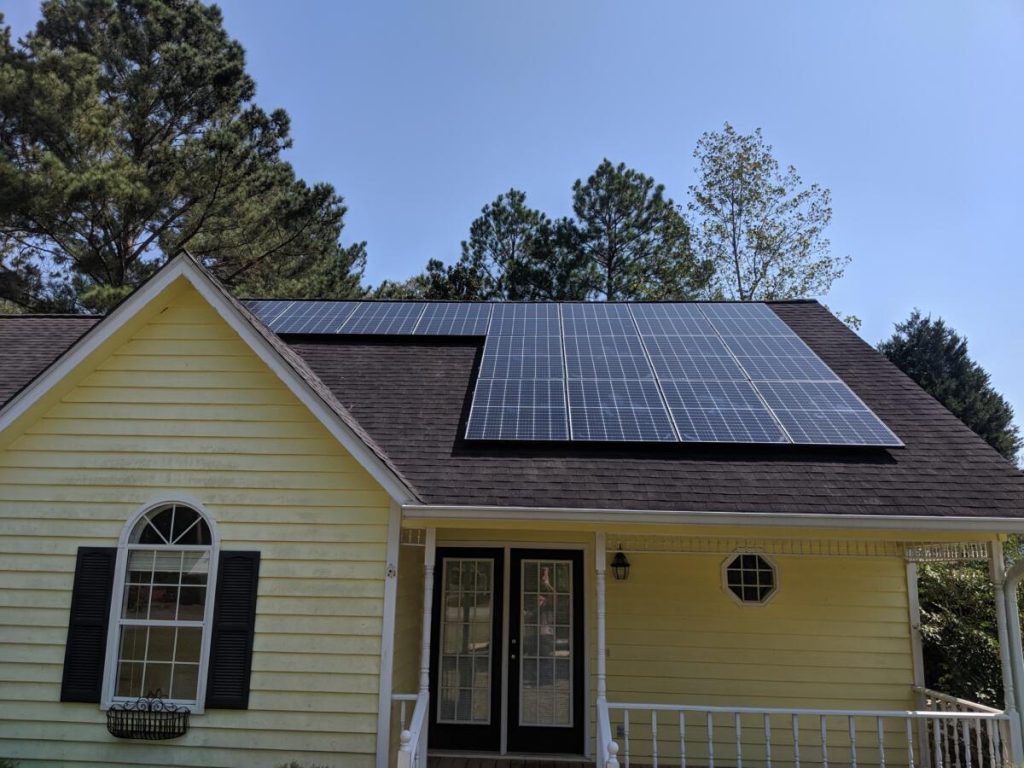
A Solar Panel Cost & Solar Energy System Payback Guide for Georgia and Florida
A Solar Panel Cost & Solar Energy System Payback Guide for Georgia and Florida Home – Blog – A Solar Panel Cost & Solar Energy System Payback Guide for Georgia and Florida As a solar company based in Cairo, GA, one of the most common questions we hear from our neighbors in Southern Georgia and Northern Florida is, “How much do solar panels for my home cost?” Once the initial sticker shock is out of the way, most people will usually follow up wondering how long it takes for the system to “pay for itself” against normal utility bills. Unfortunately, the answers to these questions are not that simple. Every installation we have ever done is completely customized to fit the needs of the end user. No two homes have the exact same amount of solar potential and energy habits. In this article, we will outline some of the averages for solar cost & system ROI for grid tie, off grid, and hybrid solar energy systems. Grid Tie Solar Systems Grid tie solar systems are designed to lower the cost of a home or business’s electricity by producing energy onsite and using it or sending it back to the grid. In grid tie solar systems, the utility is essentially used as a backup so that energy can be drawn during hours without sunlight. The Average System Size for Grid Tie Solar In general, we install grid tie solar systems that are between 3kW to 12kW. Depending on the availability of roof (or yard) space & net metering, systems are designed to lower the amount of electricity purchased from the utility grid. The Average Price for A Grid Tie Solar System (Before Incentives) For most grid-tie systems, the average upfront cost is between $12,000 and $28,000. Although this may seem high, this price is the rate before any federal or local incentives are applied. In 2020, there is a 26% federal tax rate (of total system cost) available after the purchase of a solar energy system. ROI for Grid-tie Solar Energy Systems Of course, the real value when installing solar panels is measured in system return on investment. Despite the upfront cost, the moment your solar power system is producing energy and sending it to the grid, you begin to save money on your electricity bills. In the case of net metering, you may also be compensated for the excess energy you produce. The overall ROI is generally measured at the “break-even point” in which the amount of the initial investment equals the would-be cost of electricity without solar. All of the electricity generated after that can essentially be seen as “free,” as the system continues to produce power. Variables that Affect ROI for Solar: Best Case Payback = 4-8 years In the absolute best case scenario, a grid tie solar system can pay for itself in between 4 and 8 years. In general, here are the factors that create the best case scenario: Average Solar Payback = 9-14 years Most of the time, not everything aligns in a homeowners favor. Whereas an outright cash purchase will save you money on anything, sometimes that is not a reality for those looking to save money on their utilities. In other cases, net metering may not be available, or a roof or property only receives limited sunlight. For every individual, the ROI solar purchase may be slightly hindered if: Bad Payback= 17yrs+ In some cases, now might not be the right time to go solar. If you do not live in an area where net metering is available, your property or roof does not receive enough sunlight, or your bad credit will increase finance charges, then a solar system may take more than 15 years to pay back. Solar panels are generally warrantied for 25-30 and continue to produce electricity beyond that, however 17 years may be too long to justify your purchase. Off Grid Solar Systems Solar systems that are completely off grid rely on a battery to store the energy for later use. Batteries can be very expensive, however in an off-grid situation, a battery-backed solar system may be the most cost effective solution for electricity. When compared to a gas generator, solar energy systems do not require any additional fuel costs throughout their lifetime of clean, emission (and noise) free electricity production. The Cost of Small Off Grid Solar Systems Off grid solar can be as cheap as $2,000 to $5,000 for a system that does not directly interface with a home’s electricity. Systems between 300W and 1200W (1.2kW) of solar can be used to run small appliances like sump pumps or lights. Although the warranties will not be as long as larger, premium choices, a small 1kWh – 10kWh AGM or flooded battery bank can provide enough basic functionality to run a small, closed system. Off Grid Systems for Cabins and Homes For a small off grid cabin, a battery backed solar system will generally cost between $10,000 and $20,000. Of course, this is for retreats with small appliances and limited HVAC use. If you are looking to take an ordinary home completely off grid, the price will likely fall between $25,00 and $75,000. The increase in price can be attributed to a larger battery as well as a larger inverter to run larger home appliances. If your home is large, or very energy efficient, the total cost of your off grid solar system may be more than $75,000. Hybrid (Grid tie + Storage) Solar Systems Grid tie solar systems with battery backups are considered “hybrid” systems, because they utilize elements of grid tie and off grid systems. Adding a battery to a grid tie solar system allows users to use stored electricity if grid power goes out. It also can potentially increase the ROI of a system by lessening grid power use with self-consumption and “load shifting.” The Cost of Hybrid Solar Systems To find the cost of a hybrid solar system, the total is simply the
A Solar Panel Cost & Solar Energy System Payback Guide for Georgia and Florida Read More »